Last Tuesday, I was sitting at my usual spot—a tiny table in a brightly lit coffee shop, laptop open, desperately trying to finish a blog post. I was wearing my fancy, expensive, multi-focus glasses. I was tilting my head back so far to hit the "sweet spot" of the lens that I looked ridiculous.
A friendly woman sitting nearby leaned over and smiled. She asked, "Why are you tilting your head like a confused pigeon?"
I laughed, but inside, I wanted to scream. I told her, "It’s my glasses! If I look straight ahead, the screen is blurry. I have to find the tiny strip on this lens that actually works for computer distance."
For years, I bought the idea that one pair of glasses could do everything. That led me down two very painful paths: super cheap online glasses and super expensive progressives.
I tried ordering online several times to save money. The price was great, but the lenses were always wrong. I mean, truly blurry. You send them back, right? Well, they offer you a "store credit" that is more than your refund.
Note this: If you take that store credit, and the next pair is also blurry (which mine were, twice!), you are out of luck. The store credit is not real money anymore. It’s trapped money. I ended up spending my cash, getting blurry glasses, returning them, using store credit, getting more blurry glasses, and then being told, "Sorry, no more refunds."
In the end, I had to take the frames—which I liked—to a local optician. They checked the online lenses and said the prescription wasn’t even close to correct. I paid another $200 just to get lenses put into the frames I already owned. This taught me a tough lesson about quality control and customer guarantees.
Next, I tried high-end multi-focus glasses (progressives). These cost a fortune, around $550, and were supposed to handle reading, mid-range (the computer), and distance all at once.
The frames looked great, and the in-person service was good, but the actual lenses were awful. The area for reading and computer work was so narrow. It felt like looking through a keyhole. I had to constantly move my head side to side to read one line of text on the monitor. These were definitely not the best reading glasses for computer work.
A month later, my neck hurt, and I couldn't use them. I went to a different store, got a better pair of progressives, and they worked fine immediately. This told me the problem wasn't me; it was the cheap quality of the lenses inside the expensive frames.
I realized I needed to stop looking for a one-size-fits-all solution. My biggest problem, 90% of the time, was sitting at my desk, looking 25 to 30 inches away at a big monitor. I needed extreme focus for that distance, and I needed the prescription across the entire lens, not just a small strip.
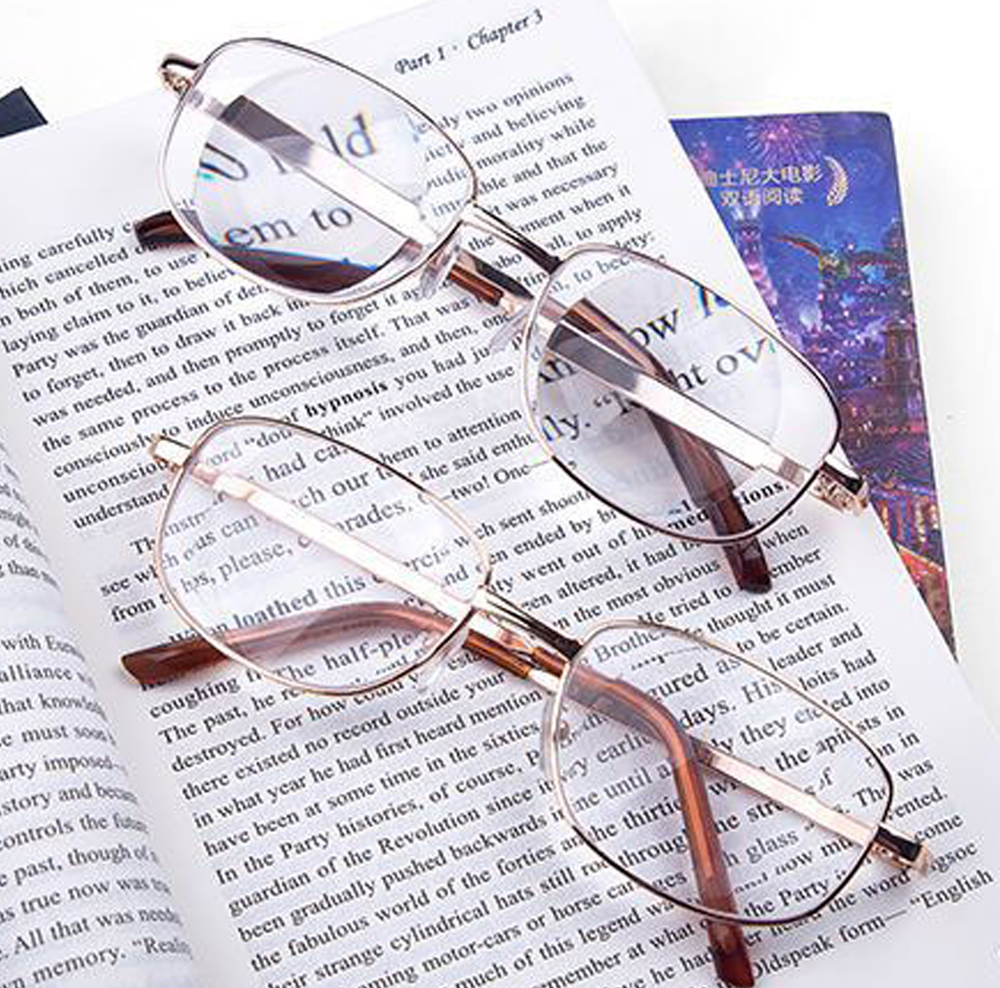
I realized I needed a different plan, something simple and strong. That's when I found the specialized lenses sold by a company called Mozaer. I started researching high magnification, single-vision lenses—specifically the 8-16D (plus 8D-Gold) power range. This power is usually used by people doing very detailed close work, but I was going to use it for computer distance.
The Strategy: I decided to focus on a high-powered lens tailored exactly for my arm's reach. My goal was clear vision for my screen, even if I couldn't see the rest of the room.