I remember the first time I tried VR. I was so excited to jump into a new world, but as soon as I put on the headset, everything was blurry! I'm nearsighted, and I hadn't really thought about how that would affect my VR experience. Turns out, I wasn't alone in this. Many people with vision correction needs face similar challenges when diving into virtual reality.
Initially, I assumed that because the VR headset was close to my eyes, I wouldn't need my glasses. I was wrong. Everything was fuzzy and indistinct. It was incredibly frustrating because I couldn't fully enjoy the immersive experience. I even started to think that maybe VR just wasn't for me. I quickly realized that my normal vision correction was essential for enjoying the virtual world.
I found myself squinting and straining to see details, which led to headaches and eye fatigue. This wasn't the fun, relaxing experience I had hoped for. I knew I needed to find a solution, and fast.
I discovered that a common misconception is that you don't need glasses in VR if you're nearsighted. This simply isn't true. The optics inside the headset are still designed for normal vision. If you need glasses to see things clearly beyond a certain distance (say, 1.5 meters), you'll likely need them in VR too. This was a lightbulb moment for me. I was trying to force my eyes to compensate, which was clearly not working.
I realized that many of the complaints I saw about blurry visuals in VR probably stemmed from people not wearing their glasses. If you don't need glasses for everyday tasks like walking around, you might still need them for the specific depth perception and stereoscopic illusion created by VR.
After some research and experimentation, I found a few solutions that significantly improved my VR experience:
The most obvious solution is to simply wear your glasses inside the headset. However, this can be uncomfortable and sometimes even impossible, depending on the size of your glasses and the headset design. I tried this initially, but my glasses felt squished against my face, and I was constantly worried about scratching the lenses.
This is the solution that worked best for me. I invested in prescription lens inserts for my VR headset. These are custom-made lenses that fit directly into the headset, providing clear vision without the need for glasses. The difference in comfort and clarity was incredible. I wish I had done this sooner! Lens inserts are a total game changer.
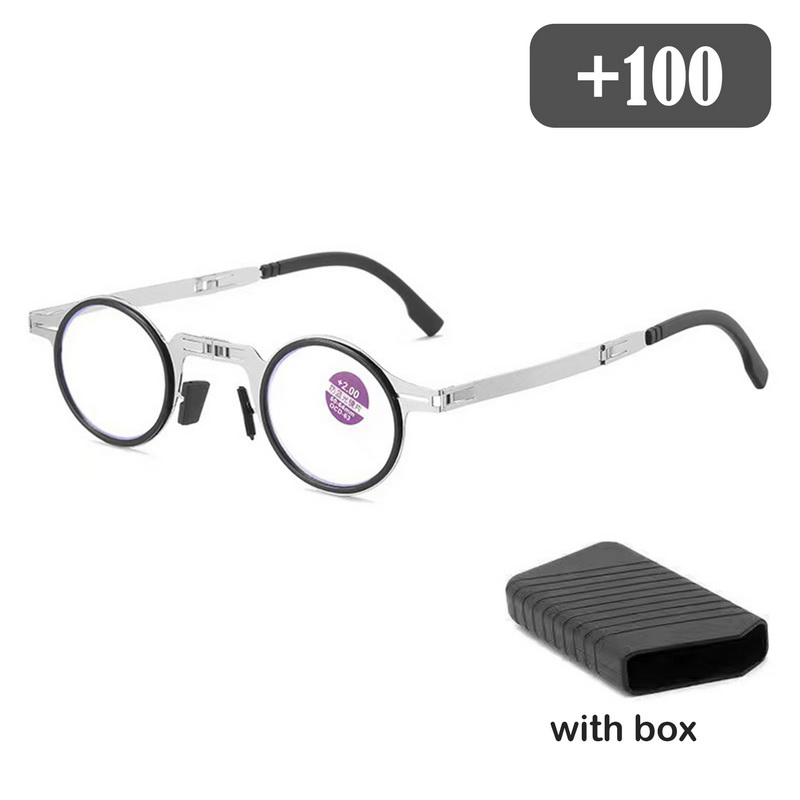
I also came across some interesting reading glasses, like the Portable Smart Folding Reading Glasses. These could be handy for those with presbyopia who need a little boost for near-field tasks, even outside VR. While not specifically for VR, the concept of having convenient, clear vision correction is relevant.
I haven't personally tried these specific glasses within the VR headset, but I can see how having a compact, portable option for reading could be beneficial in various situations. I imagine quickly checking my phone or a real-world document while taking a break from VR would be easier with something like this on hand. But for the VR experience itself, the lens inserts were the clear winner.
Here's a quick breakdown of the pros and cons of each method: