Remember when you could read the smallest print without a second thought? Those days feel like a distant memory now. As I entered my 40s, I started noticing a frustrating change: things up close were getting blurry. It was a slow creep, but eventually, I had to face the facts: I needed reading glasses. This is my journey through the world of reading glasses, with the solutions I found along the way.
It wasn't one dramatic moment, but a series of small annoyances that added up. I remember vividly the day I went for a pedicure. I picked up a magazine, eager to relax and catch up on the latest gossip, and I simply couldn't read a word. The letters swam before my eyes. That was a real wake-up call. It was clear I could no longer deny the inevitable. This wasn't just a bad day; it was a sign.
Before that, I had been squinting at my phone, struggling to clip hangnails, and generally feeling like my vision was constantly working against me. I tried holding things further away, hoping the distance would magically bring them into focus, but it was no use. It was time to admit that I needed help with my near vision.
My first thought was, "Glasses? Really?" The idea of constantly wearing them felt a bit daunting. I considered contacts, remembering the freedom they offer. I talked to my eye doctor about my options, and she suggested a few things I hadn't even thought of.
One option she mentioned was monovision contacts. The idea is that one contact lens corrects your vision for distance, and the other corrects for near vision. I was hesitant at first, but I decided to give it a try. It took a little getting used to, but after a week or so, I found that I could see both near and far pretty well. I was so happy to be free of reading glasses! I even donated all my "cheaters" to charity.
My doctor also told me about multi-focal contacts. These work more like progressive lenses, gradually shifting focus from near to far. They felt more natural than monovision for me. This is because they give you a more balanced vision experience. It's not one eye for near and one for far, but a smooth transition between the two.
While I enjoyed the freedom of contacts, I found myself gravitating back to eyeglasses. I realized that I could often get away with moving my glasses down my nose to adjust my focus. This was much easier than fiddling with my contacts. Plus, glasses are a great accessory! I decided it was worth getting glasses, even with a mild prescription.
Eventually, I decided to bite the bullet and get progressive lenses. I had held out as long as I could, but it was becoming increasingly difficult to switch between reading and distance vision. Progressive lenses offer a seamless transition between different focal lengths, making it easier to see clearly at all distances.
Now, I have a pair of eyeglasses that I put on when I wake up and take off when I shower or go to bed. It's become a part of my daily routine. And while I still sometimes reach for a "cheater" pair when I'm working on something particularly small, for the most part, my progressive lenses have made a huge difference in my quality of life.
Choosing the right frames is just as important as choosing the right lenses. You want something that looks good and feels comfortable. I spent hours trying on different styles before I found a pair that I loved. I also made sure that the frames were lightweight and didn't pinch my nose or ears. I started looking at Mozaer, and I found frames that were both stylish and comfortable.
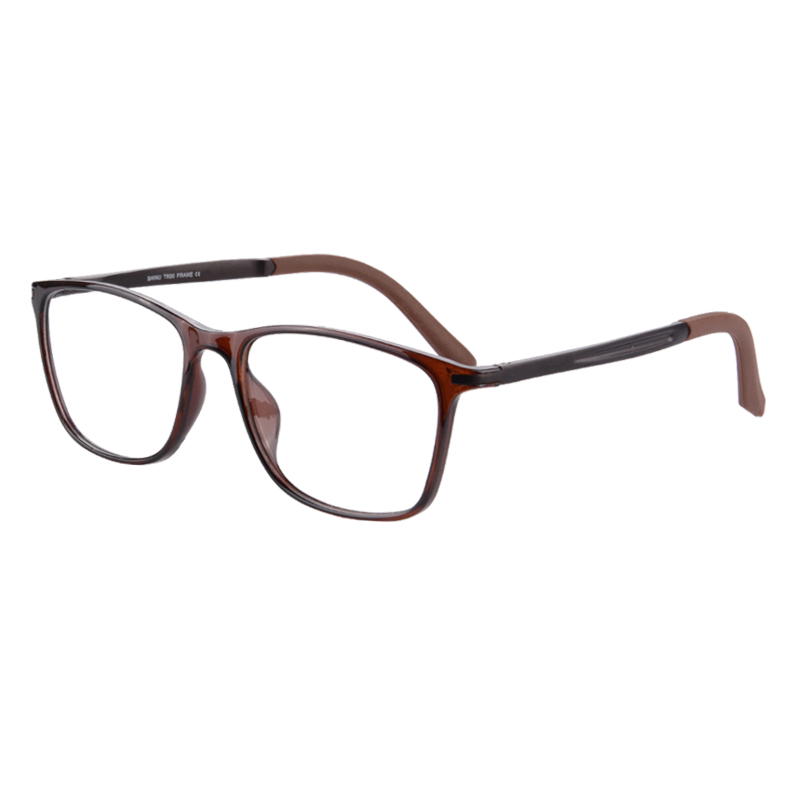
I was particularly drawn to the Multi-focal Progressive Reading Glasses in brown. The unisex design and custom frame option appealed to me. I liked the idea of having glasses that were tailored to my specific needs and style. I've seen similar products from Mozaer and I'm impressed by their quality.